After Navalny: Grief, Guilt, and the Fight for Russia’s Future
In the wake of Navalny’s death and the continued war in Ukraine, an exploration of guilt, identity, and what hope looks like when it’s all that’s left.
On February 16, 2024, the air out of my lungs, and the last remnants of a hopeful future, were knocked out of me. I was in London. Two months out of a graduate degree in political science, the utility of which I was trying to grasp while wondering if the future I had upended my academic career for would ever exist. The pings started going off in the Russian Democratic Society’s group chat. The modern harbingers of death and disaster. Alexei Navalny was dead. They were right—another February (invasion, Nemtsov, Navalny—I am beginning to suspect that the Kremlin powers simply seek to monopolize all our February weekends) brought with it a new numbing shock.
Though from an outside perspective, the opposition leader’s death might have looked like an inevitability following his incarceration, the shock and numbness I felt two years earlier flooded back like it never left. Navalny had gone through so much that in my eyes that he seemed immortal. The man was poisoned and raised like Lazarus. He came back to Russia following his convalescence despite the near certainty of his arrest. The man who compared an ever-expanding prison sentence to an intergalactic adventure. An indefatigable optimist in the face of all signs to the contrary. He truly showed the way. His very existence made me feel that everything was going to be alright. That no matter the obstacles, all would be worth it. We could continue the fight. He was, in my eyes, the purest representation of what a beautiful Russia of the future could be. And then he was gone.
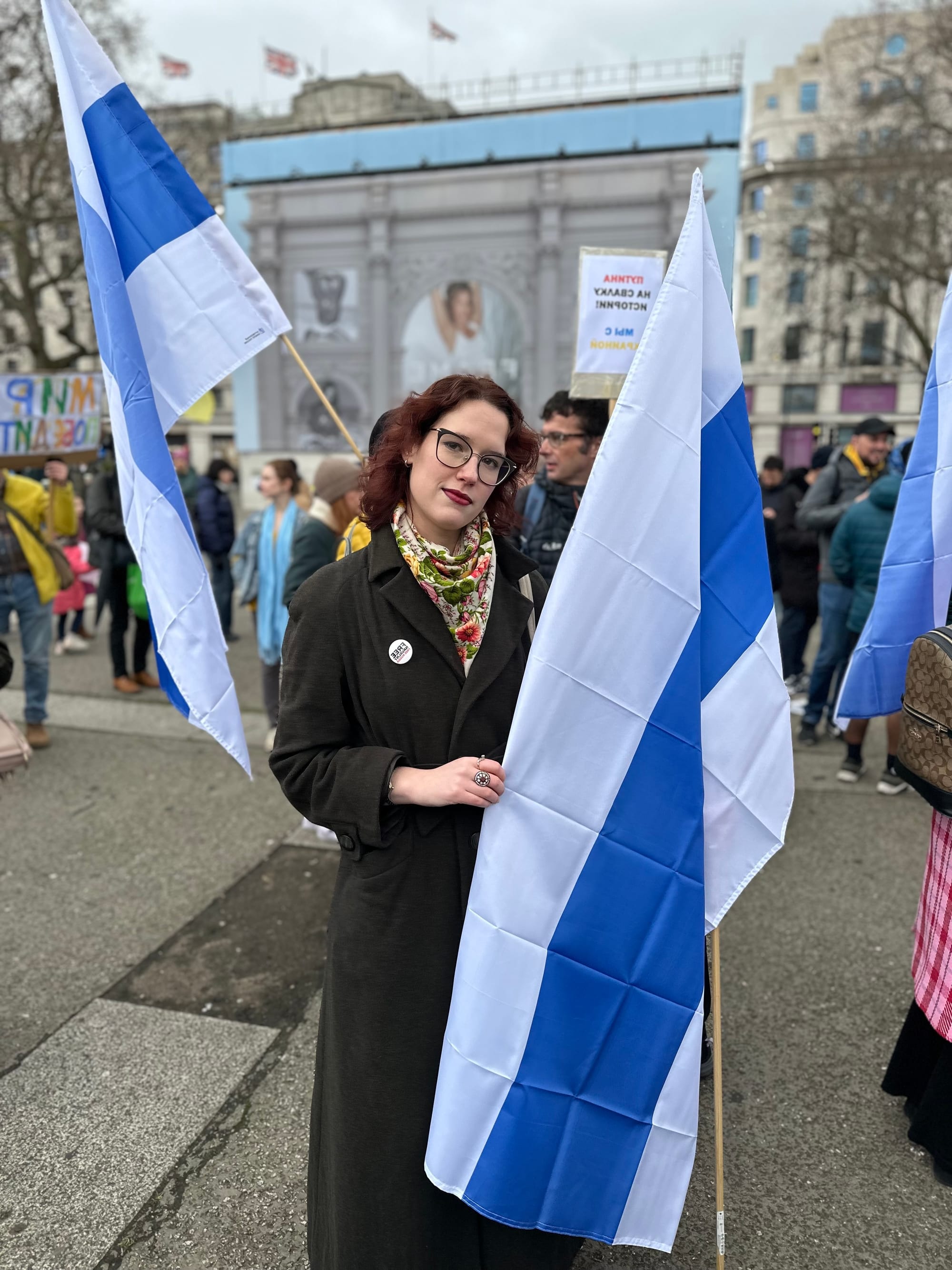
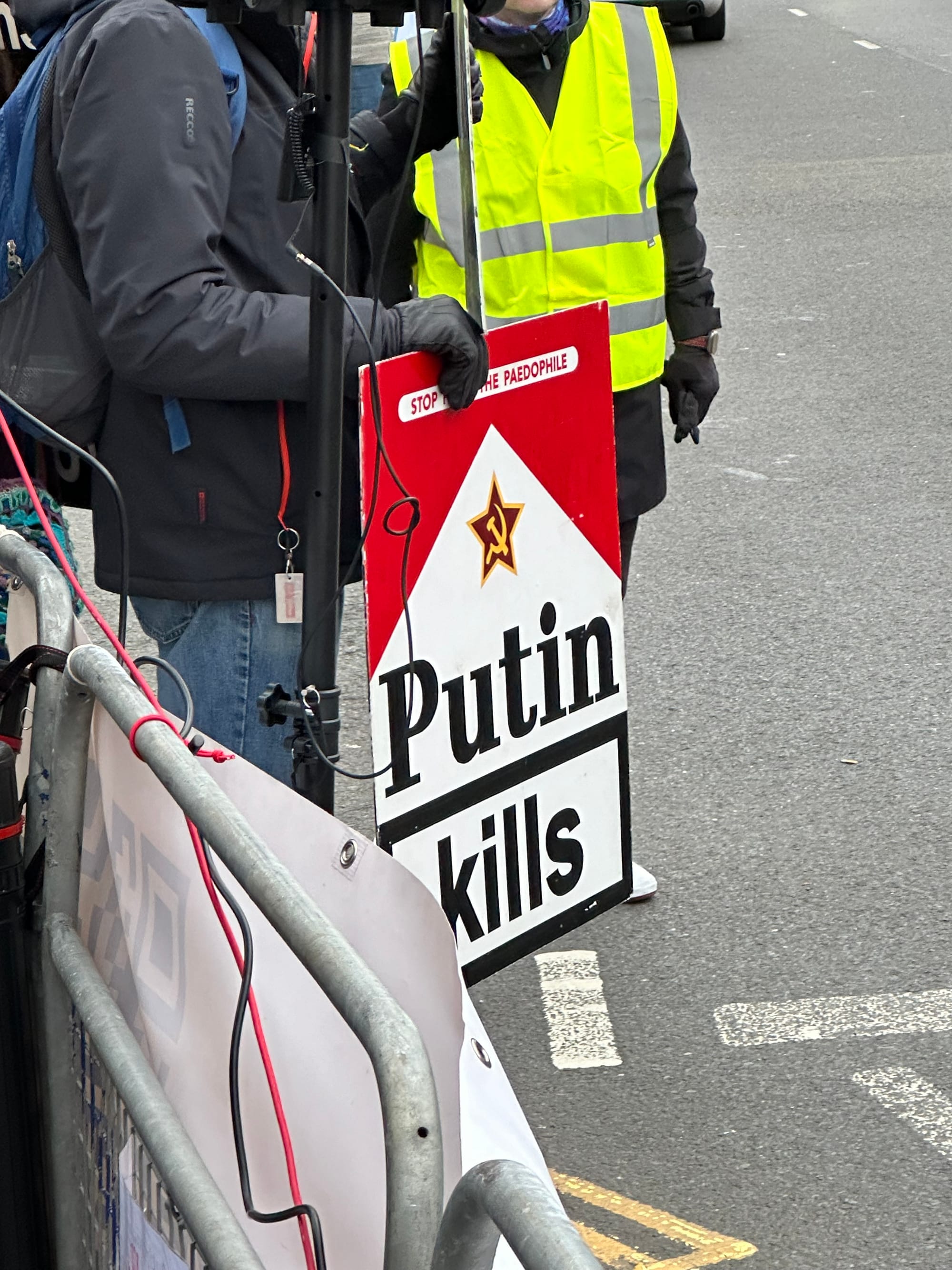
Photos by Radmila Yarovaya
Three years ago, with Russia’s full scale invasion of Ukraine the world as I knew it ended. Born in 2000, I am the same age as the Putin regime. I grew up in the “fat” 2000s, utterly bewildered by my parents’ immigration to Canada. The world, after all, was perfect. Russia was respected. We had a young, virile president. A vigorous and growing social and arts scene, and even a peaceful turnover of power with the Medvedev presidency. I spent my summers in Moscow with my grandparents, who would religiously ship me and my cousin off to Crimea for weeks on end. Crimea—the eternal paradise of my childhood. I shudder to think of it now.
This all ended in 2014 with the annexation. The approval of this move, by people whom I thought of as rational and liberal, was the most chilling thing of all. My visits to Russia became less frequent. The list of topics not to breach with my Russia-living family grew by the day. 2018 was the last time I went back—though of course, I didn’t know it then. That summer, Moscow was coming off the high of hosting the World Cup, and everyone seemed to be in love with the host nation.
The full-scale invasion of Ukraine was as unthinkable. The bombing of Kyiv was as asinine as if London nuked Paris on a bright summer day. The analogy I used when explaining the utter absurdity of the world that I was suddenly inhabiting was that if I found out that everyone was actually Pikachu in a human suit, I wouldn’t be surprised. Silly. Naive. But that was the bubble of incomprehension I found myself in. Perhaps when you take a moment to look at the broader context of everything that happened, much like in my childhood, you couldn’t claim to be surprised. The invasion of Georgia, annexation of Crimea, systemic removal of any opposition, all, in hindsight, seemed to be leading to this inevitability. Still, the world that I knew—in which I harboured secret hopes of going back to Russia with my shiny Western degrees and helping the fight for democracy—forever shattered.
That languorous spring when I was trying to rebuild the vision of the world around me, my friends and I went to a debate concerning the war and Europe's future. One of the speakers—Radoslaw Sikorski, then the Polish Minister of Foreign Affairs—emphasized the threat of Russia’s expansionist ideas. The unchecked annexation of Crimea, war in Luhansk and Donbas, and eventual full-scale invasion, which seemed to be inevitably barreling towards Russian troops knocking on the doors of not just the former Soviet Union but the Russian Empire in an attempt at ressentiment.
The anxiety of this possibility followed me across the pond to London, but as time went on, I settled into the rhythmic comfort of academia, while the world settled into the war. Settled into the war. Perhaps to protect our own sanity, we grew numb to the horrors surrounding us. Perhaps they could go on forever. When Ukrainian forces breached into Kursk, I thought perhaps David could miraculously overpower Goliath. The global order I believed in was dashed with the second Trump presidency and the country touting itself as the bastion of democracy started openly bowing down to oligarchs (both domestic and foreign), abandoning its allies, and playing house with dictators. For every step forward, there seems to be about a kilometer of rolling back.
Do I feel guilty? I spent my life trying to be the perfect Canadian. The dream of an immigrant fantasy. The best grades, the most stable dreams. Only to find that there was nowhere to run from who I am. Crimea was annexed when I was 13, at the end of elementary school. The full-scale invasion began when I was 21—my last semester of undergrad. I had a spot at law school that I turned down to study Comparative Politics at the London School of Economics and Political Science. The motto of the school is rerum cognoscere causas—“to know the causes of things.” That is what I tried to do. I spent countless hours trying to find out why this was happening. Where Russia and Ukraine diverged. To make sense of a senseless world.
At the beginning of the war, I wrote op-eds in the University of Toronto’s student newspaper (some may say abusing my powers as the co-founder of one of them) and raged on social media against the absurdity of what was going on. We were all in shock. If before it was possible to pretend—even with the amendments to the constitution and Putin’s now limitless rule—that Russia was still part of a global community, the war made it clear that Russia and Russians could never be on the right side of history again. No matter how much the emigres try to brand themselves as the “good” Russians, we are all marred by association. We were all scarred by and benefited from a system that grew into the next fascist European power. How could we ever find a place for ourselves again?
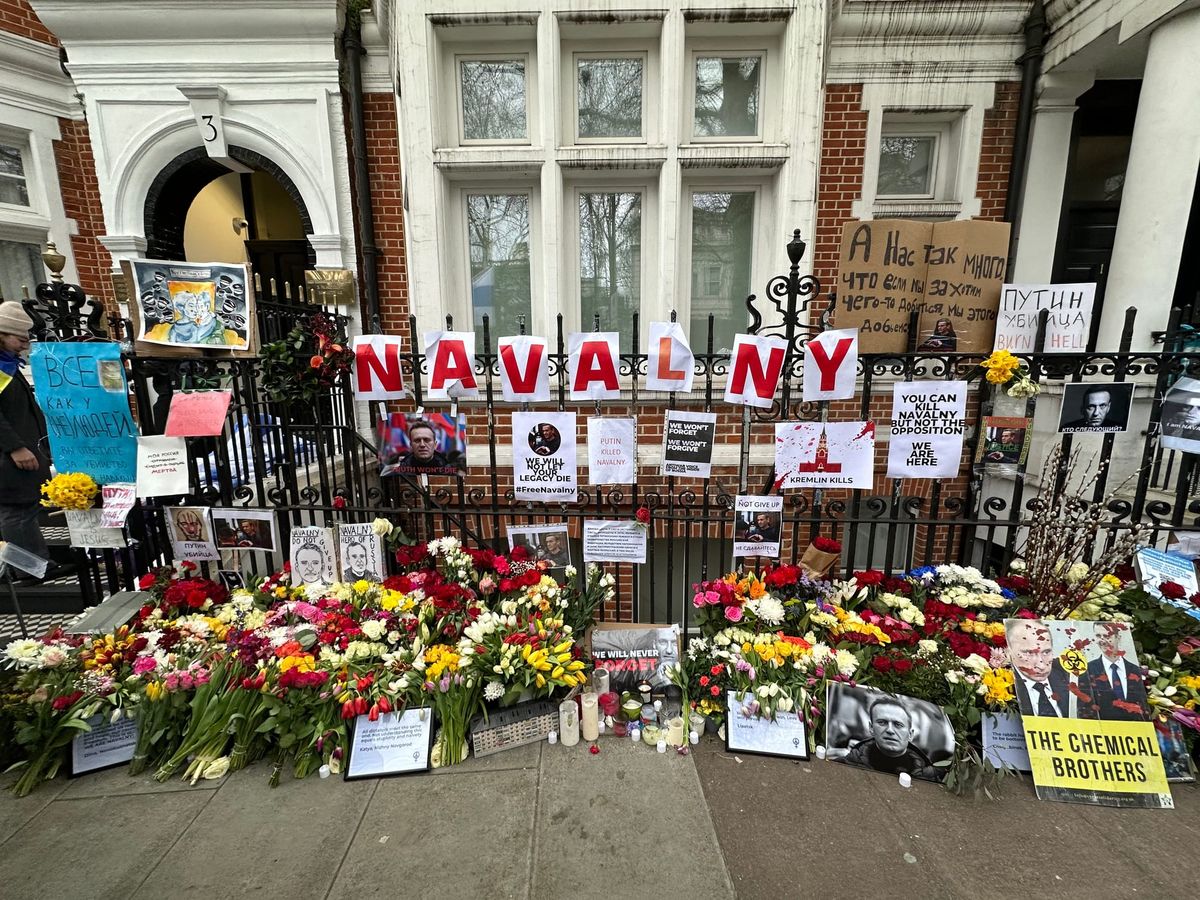
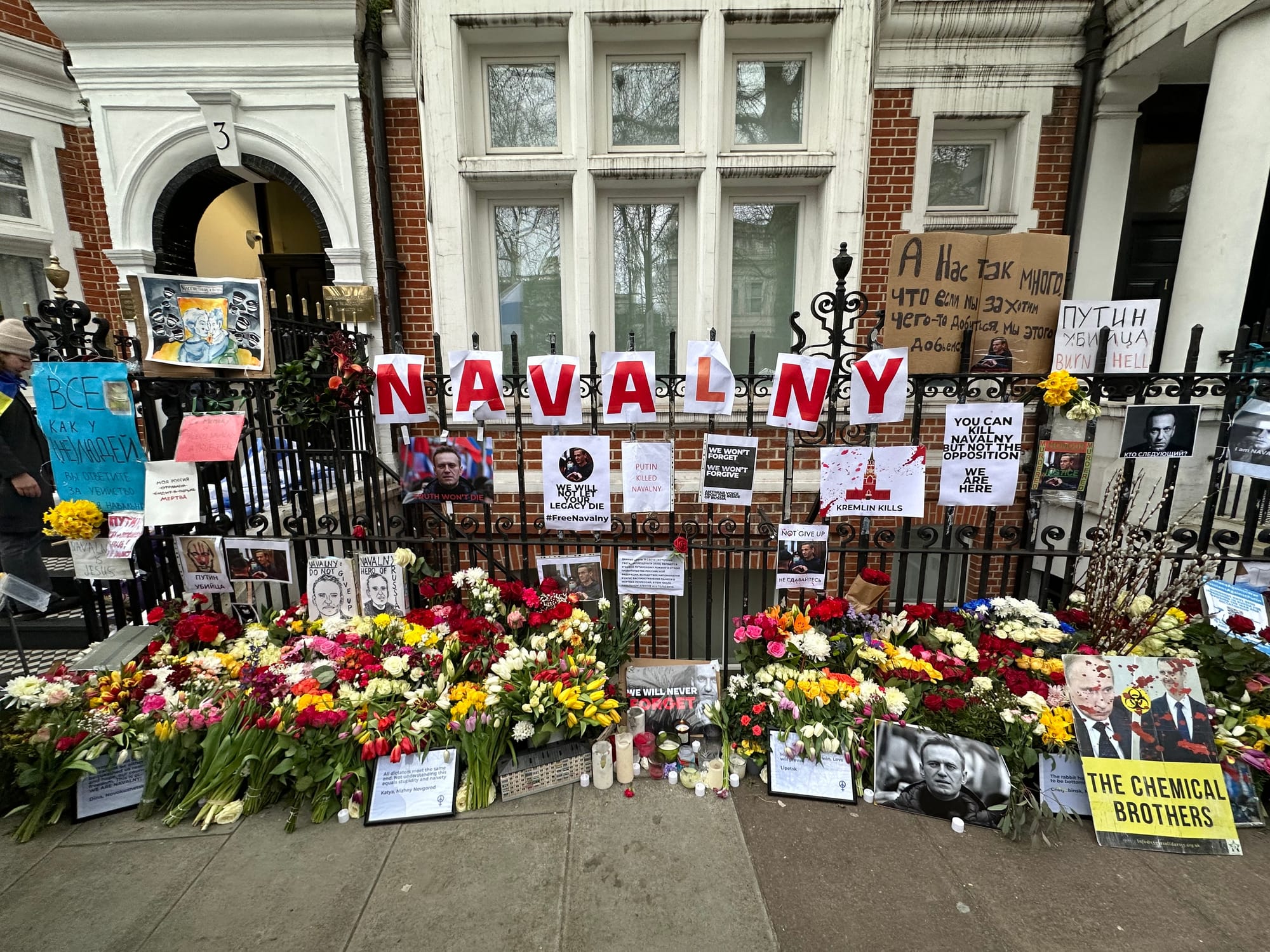
Which brought me to last February. Being in London, I had somewhere to channel my anger. I helped design posters for the Russian Democratic Society and picketed outside the Russian embassy near Hyde Park. It was uplifting to see everyone’s unity in the face of the anger and confusion. But there was an absence there. A loss that can never be rectified. Another link in a never-ending chain of collective grief. I catch myself thinking if I am mad at him. If I have the right to be.
The nature of martyrdom—the selfishness of it. Navalny, who was prepared to give everything, finally did. Could he have done more, meant more, having gone to the West? Sure, he might’ve lost some standing in the eyes of the Russians at home—but through years of constant propaganda, they already saw him as a traitor. The emigres would have understood his flight—the need to preserve oneself in the face of a machine intent on wiping you and your legacy out. Or did the possibility of a demise so imminent—while undoubtedly crossing the mind—never appear as a viable threat? Did he think that he would follow in the footsteps of Mandela and, exonerated, lead us to a new age? Is Alexei Antonolievich worth more as a symbol now? The humanist in me rejects that. Just as it rejects the higher value of the plausible to the definite. All this, though, is mere speculation. What is true is that Navalny was one of the few figures who stood a chance of uniting what can generously be called the Russian opposition.
At the beginning of 2024, I started attending the Russian Democratic Society’s protests and events and quickly began volunteering with them—making posters and dutifully picketing outside of the Russian Embassy at Hyde Park. Having taken a class on exiles in my final undergraduate year and spending hours poring over the diaries, correspondence, and publications of the second wave of Russian immigration, I couldn’t help but notice the similarities between the white emigré of old and their contemporary counterparts. Much like their predecessors from the beginning of the last decade, who also settled in Paris, Istanbul, and Berlin, they are appalled and angry. Convinced, perhaps, that this new world order is temporary and common sense will prevail. Some dream of going back to a reformed Russia. Some crave to put down their roots in new homes. Some harbour hope to go back home. They are diverse. They are many. They are kind. They are good. They all fucking hate each other.
Don’t get me wrong, as a political scientist, I know the value of varied discourse and that disagreements between political factions cannot be overstated. That is, when there are political factions. When they hold power, they can sway the masses and affect legislation. Maybe, much like with the political undercurrents of my childhood that brought forth the new world order, I was simply too young to notice the inherent dynamics at play. Maybe my close involvement within an opposition group lent me a new perspective. Maybe with the death of Alexei Navalny, the spirit of moderation was abandoned, and the gloves came off. Maybe it was all these factors and more. The overall atmosphere that prevails between the leaders of the Russian diaspora is of deep distrust and affinity for knives and backs, with a few academics and artists pleading in the corner for everyone to just please, please, please get along. While the opposition tries to present a brave and united front, the pride, righteousness, and frustration from inaction and inherent lack of power that permeate the space threaten to send the whole house of cards tumbling down. Again, perhaps I am naive and my perfectionist tendencies have been exacerbated by years spent in academia, but I do not see the point of infighting when the enemy has near infinite resources and has made himself into what he surely thinks is the god king of one sixth of the world’s landmass.
Which, of course, leads us to the greater question looming over us all—can an effective opposition be launched from abroad? Unlike Svetlana Tikhanovskaya of Belarus, who can at least make a claim to legitimacy through her participation in the (almost certainly rigged) elections of 2020 and attempt to form government-in-exile that seeks to represent the Belarusian people and kiss up to Western politicians, Russia has no such figure. Given my above assessment of the climate, you won’t be surprised to know that any attempts to form a united coalition and establish a single figurehead have failed. There was a person who could have done it. That person is now in a box.
The issues faced are much deeper and permeate Russian history like a never-ending rot. Russia never stopped being the Soviet Union. Just like the Soviet Union never stopped being the Empire. Labels change, but contents stay the same. Just look at modern Russian media and propaganda. It is now shameful to criticize the USSR. The same USSR that exiled, executed, imprisoned, and sent to camps the same families of the people proudly supporting their neighbor’s slaughter today. In this sense, the former Soviet republics were lucky. There was a clear line to draw before and after their absorption into the Soviet Union. They had an identity to go back to. Russia was the Russian Empire. It was the USSR. It is uncomfortable to confront horrors when you were both the perpetrator and the victim. An exercise in lustration would have brought up collective guilt, yes. But it also would have made us come face to face with our violent reality and say “never again”. Not just for others' sake. But for our own. For the sake of all those who still looked over their shoulder, didn’t trust their neighbour, whispered about the “undesirable” or disappeared family members.
This could’ve all been left behind. Dealt with in the 90s and discarded on the way to a brilliant future. Instead, the gangrenous rot of imperialism kept spreading. While Ukraine was shakily, but surely, building up its internal democratic institutions (not without its challenges of course, but democratization is rarely an unblemished affair), complete with Huntington’s beloved Two Turnover Test, Russians were guilelessly enjoying, like the deceitful first days of spring after an endless winter. All while its judicial system was reformed into impotency and all governing power concentrated in the executive by 2004. No one, besides the ones paying close attention, noticed. Those who did were dismissed as city madmen. The rest was all decoration and sleight of hand to disguise the descent into the inevitability of today.
The carefully structured world of treaties, agreements, and mutual respect—the one we once pretended to uphold—is crumbling before our eyes. Far-right ideologies are gaining ground, wars rage in Europe and the Middle East, and the most powerful country on Earth is increasingly held hostage by megalomaniacs and billionaires. Isolationism is back in fashion. If I were a historian, I’d be quaking.
And yet, if there’s one thing I’ve taken from studying and living through these seeming end times, it’s that history never flows in a straight line—but it does move. Progress may be stalled, reversed, sabotaged, but is never wholly erased. The arc doesn’t break; it bends. For where there is life, there is hope. And where there is a desire to do good—even among fractured, bickering exiles—light can still seep through.
As a certain fearless politician once reminded us: love is stronger than fear.
Comments ()