
Banned Book Club #1: Recap
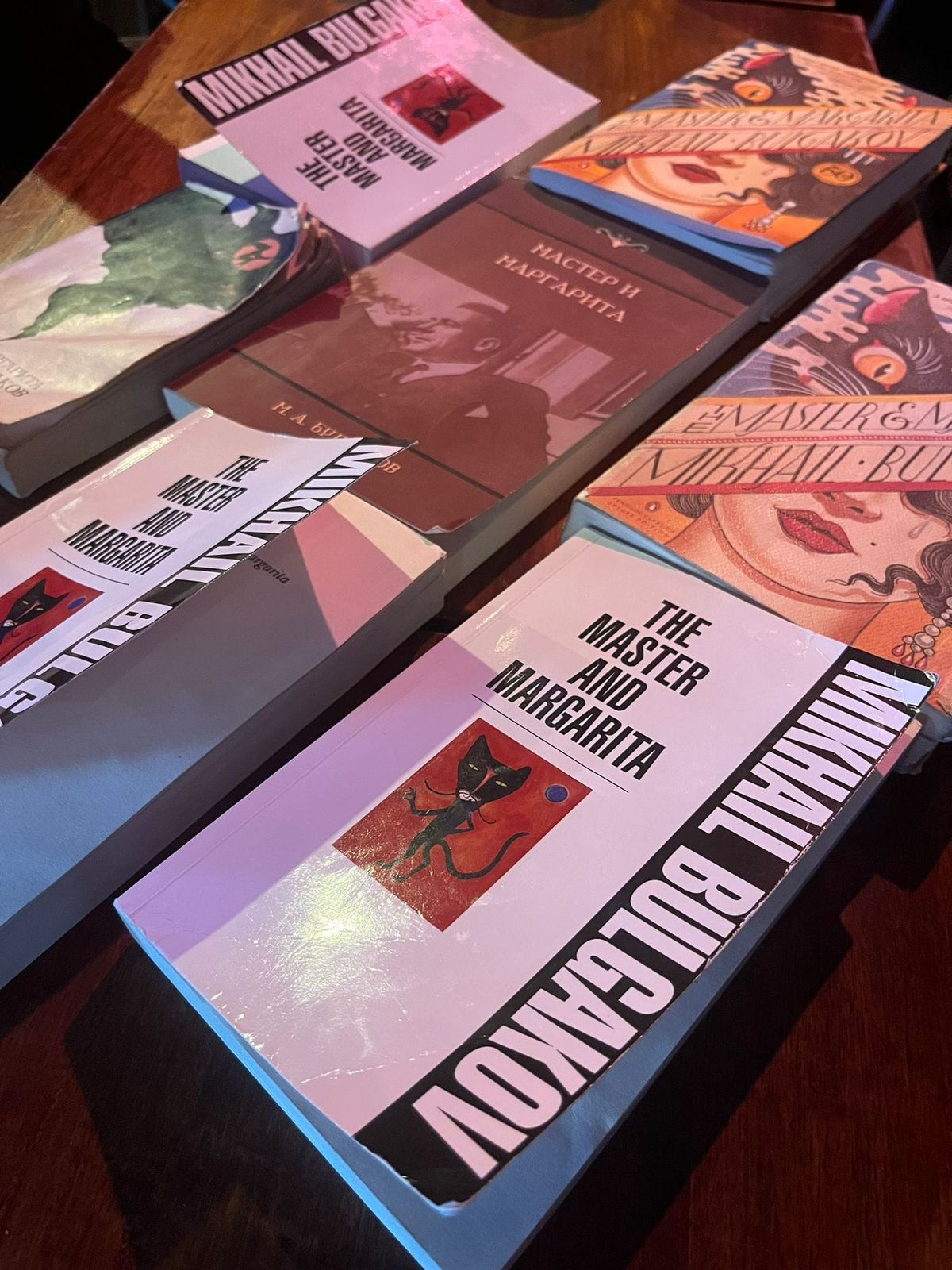
For the first time in its long and anticipatory history, the Banned Book Club met at Drom Taberna to discuss Mikhail Bulgakov’s masterpiece The Master and Margarita, over a samovar of tea, disappointing timbits, and what I can only describe as an alarming amount of emotional investment in the devil.
The Master and Margarita is perhaps Bulgakov’s most seminal work: a stunning display of semi-autofiction in which he strays furthest from his medical roots to grapple instead with creation, faith, censorship, and the eternal tension between good and evil. First published in heavily censored fragments in Moskva magazine in 1966, before appearing in full in Paris in 1967 and circulating through samizdat copies across the Soviet Union for years after, the novel itself feels almost mythological in origin. It is impossible for me to approach it objectively. With eternal reverence and longing for the Moscow of old, it is a book I reread every spring. Sometimes, on the warming wind, I can almost hear Margarita cackle as she flies past the spires of whatever city I happen to bless with the misfortune of my presence.
Much of our discussion circled around Woland himself and the peculiar mundanity of evil in Soviet Moscow. In Bulgakov’s world, the supernatural barely registers as extraordinary because daily life under the state has already become surreal and dehumanizing enough. We spoke about inevitability and predestination—after all, “Anushka has already spilled the oil”—and whether any of the characters truly possess free will at all. Misinterpretation emerged as another recurring theme: Christ misunderstood by history, Ivan dismissed as insane despite being one of the few characters able to perceive truth, and even Woland himself potentially lying about why he came to Moscow in the first place. We questioned why there appears to be no benevolent force actively opposing the devil, whether Woland’s entourage attempts to create rituals and spectacles that mimic religion, and how the Soviet state itself demands spiritual submission by insisting there is nothing higher than its authority. Margarita’s sacrifice and supposed agency also prompted fierce debate—is she liberated through her pact with Woland, or merely choosing between systems of power? Fittingly for Bulgakov, we left with very few answers and far more questions than we arrived with.
Listen to our full discussion here.


Comments ()